
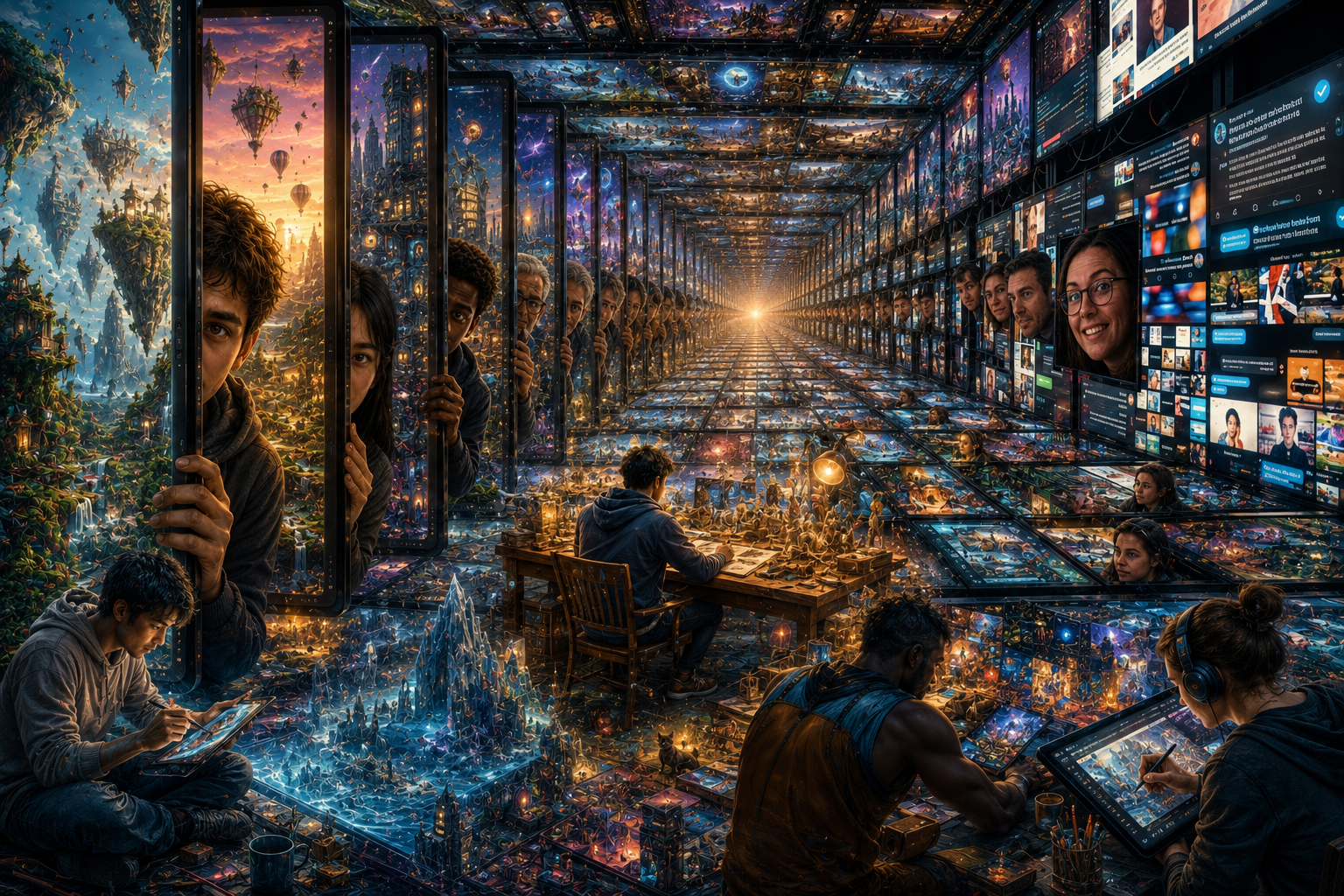


We like to think of our lives as self-contained films. We are the directors, the cinematographers, and undisputedly the main characters. We move through space with a deeply ingrained sense of a personal bubble—not just a physical one, but a psychological, emotional, and narrative sphere that belongs solely to us.
But the reality of human existence is far more complex, chaotic, and beautiful. Your life is not a solo film screen; it is a single pane of glass in an infinite, towering stack of translucent overlays.
The layer of your own world is constantly intersecting with endless layers of other people’s worlds. And the moment those layers touch, they alter one another. People are constantly adding their own colors, scratches, notes, and brushstrokes to your picture, just as you are quietly, sometimes invisibly, altering theirs.
The Myth of the Solitary Universe
From the moment we develop consciousness, we construct a worldview designed to protect and define the ego. This is “Layer Zero”—your immediate reality. It is built from your memories, your traumas, your daily routines, the specific way you take your coffee, and the unique anxieties that keep you awake at midnight. To you, this layer feels solid. It feels like the baseline of existence.
However, the illusion of isolation shatters the moment we step outside—or even the moment we open a smartphone.
Sonder (n.): The profound feeling of realizing that everyone, including every random passerby, has a life as vivid and complex as your own, populated with their own ambitions, friends, routines, and worries.
When you sit in a crowded coffee shop, you aren’t just a person in a room. You are a sovereign universe parked at a table, surrounded by twenty other sovereign universes.
- The Barista: Their layer is currently defined by a grueling morning rush, a broken espresso machine, and a text message they shouldn’t have read before work.
- The Stranger to Your Left: Their layer is vibrating with the adrenaline of an upcoming job interview.
- The Couple by the Window: Their layer is heavy with the quiet, suffocating atmosphere of a relationship ending in slow motion.
When the barista hands you your cup, your worlds bleed into each other. A smile, a sharp tone, a spilled drop—these are the microscopic collisions where one person’s layer forcefully imposes itself onto another’s.
The Constant Additions: How Others Paint on Your Canvas
We rarely leave another person’s universe exactly how we found it. Human interaction is a process of collaborative graffiti. Whether we like it or not, people are constantly adding to our picture.
The Micro-Additions
Consider how easily your internal climate can be altered by a completely random external force. You are having a perfect morning; your layer is bright, crisp, and organized. Then, an aggressive driver cuts you off, honks violently, and throws up a hand gesture.
Suddenly, a streak of dark, muddy paint has been slashed across your morning. That driver added their anger, their rush, and their chaos to your picture. You might carry that smudge with you to the office, accidentally passing it along to a coworker by snapping at them, thereby staining their layer.
The Macro-Additions
On a larger scale, the people we choose to let closest to us don’t just add a stroke of paint; they redesign the entire geography of our world.
- Partners introduce us to new vocabularies, new foods, and new ways of managing grief.
- Friends inject their humor into our internal monologues until we start thinking in their cadence.
- Mentors redraw the boundaries of what we thought we were capable of achieving.
Years after a relationship ends, you can look at the layer of your world and point to specific, permanent fixtures—a love for a obscure musical genre, a specific philosophy on life, a habit of saving leftovers a certain way—and say, “Someone else put that there.”
The Digital Megalith: The Great Layering Machine
If physical existence is a subtle intersection of worlds, the internet is a violent, high-speed collision of billions of them happening simultaneously.
Social media has fundamentally altered how layers interact. Historically, your world only intersected with the people in your immediate geographic and social vicinity. Today, you can sit in your bed and expose your personal layer to the unfiltered, chaotic projections of millions of strangers across the globe.
[Your Personal World]
         │
         ├──► (Algorithms sorting content)
         │
[Global Digital Matrix] ──► (Millions of users leaving comments, trends, and opinions)
         │
         └──► [The Altered Version of Your Reality]
Every comment section, every viral video, every piece of tragic world news, and every curated lifestyle post is an aggressive addition to your mental picture. We are consuming the anxieties, triumphs, political stances, and aesthetic choices of a global population.
The danger of this digital hyper-intersection is that our own authentic layer can easily become buried. When everyone is shouting their reality at you, it takes immense effort to remember what your own canvas looked like before the noise.
Embracing the Collage: Agency in a Connected World
It can feel overwhelming to realize how little control we have over the purity of our personal world. If we are constantly being influenced, triggered, inspired, and altered by the endless layers around us, who are we really?
The secret lies in shifting our perspective from seeing ourselves as passive victims of circumstance to seeing ourselves as curators of a living collage.
You cannot stop other people from intersecting with your world. You cannot prevent the world’s grief, your boss’s bad mood, or the city’s noise from bleeding into your day. But you do possess the agency to decide what stays on the canvas.
- Acknowledge the Origin: When you feel a sudden surge of anxiety or a shift in mood, ask yourself: Is this mine, or did I inherit this from someone else’s layer today?
- Be a Conscious Contributor: Recognize that you are also a force of change in the universes of others. When you interact with a cashier, a child, or a colleague, what are you adding to their picture? Are you leaving a smudge of frustration, or are you offering a stroke of clarity and warmth?
- Protect the Core Canvas: Maintain practices—solitude, meditation, art, journaling—that allow you to peel back the intersecting layers of the world and sit quietly with your own raw, unaltered reality.
The Shared Masterpiece
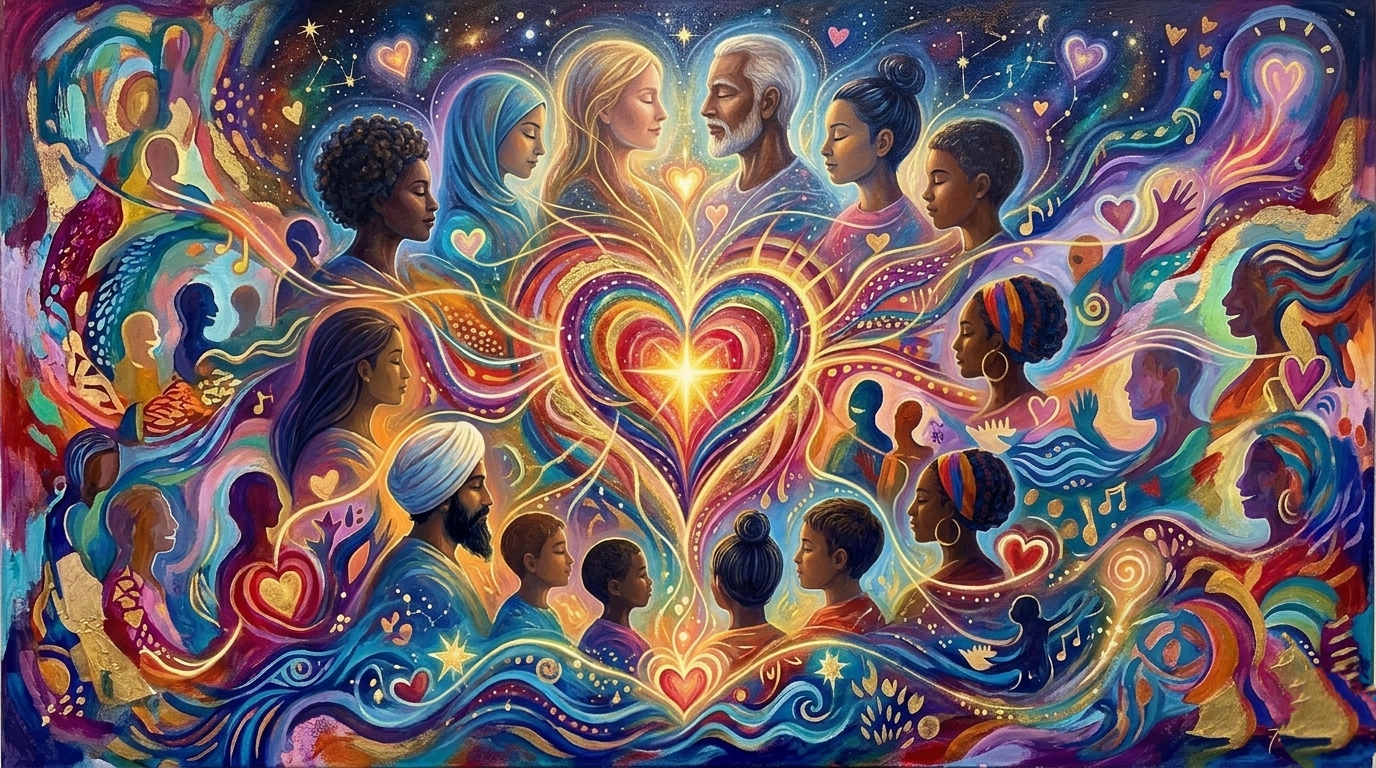
To be alive is to be messy. To be human is to be interconnected. The beautiful, terrifying truth of existence is that none of us are painting in a vacuum.
Your world is a rich tapestry of overlapping lives. It is a mosaic of the people you’ve loved, the strangers you’ve passed, the art you’ve consumed, and the heartbreaks you’ve endured. Rather than fighting to keep your layer pristine and isolated, there is profound peace in embracing the collision. We are all accidental co-creators of a massive, chaotic, shifting masterpiece—constantly adding to the picture, together.

Leave a Reply