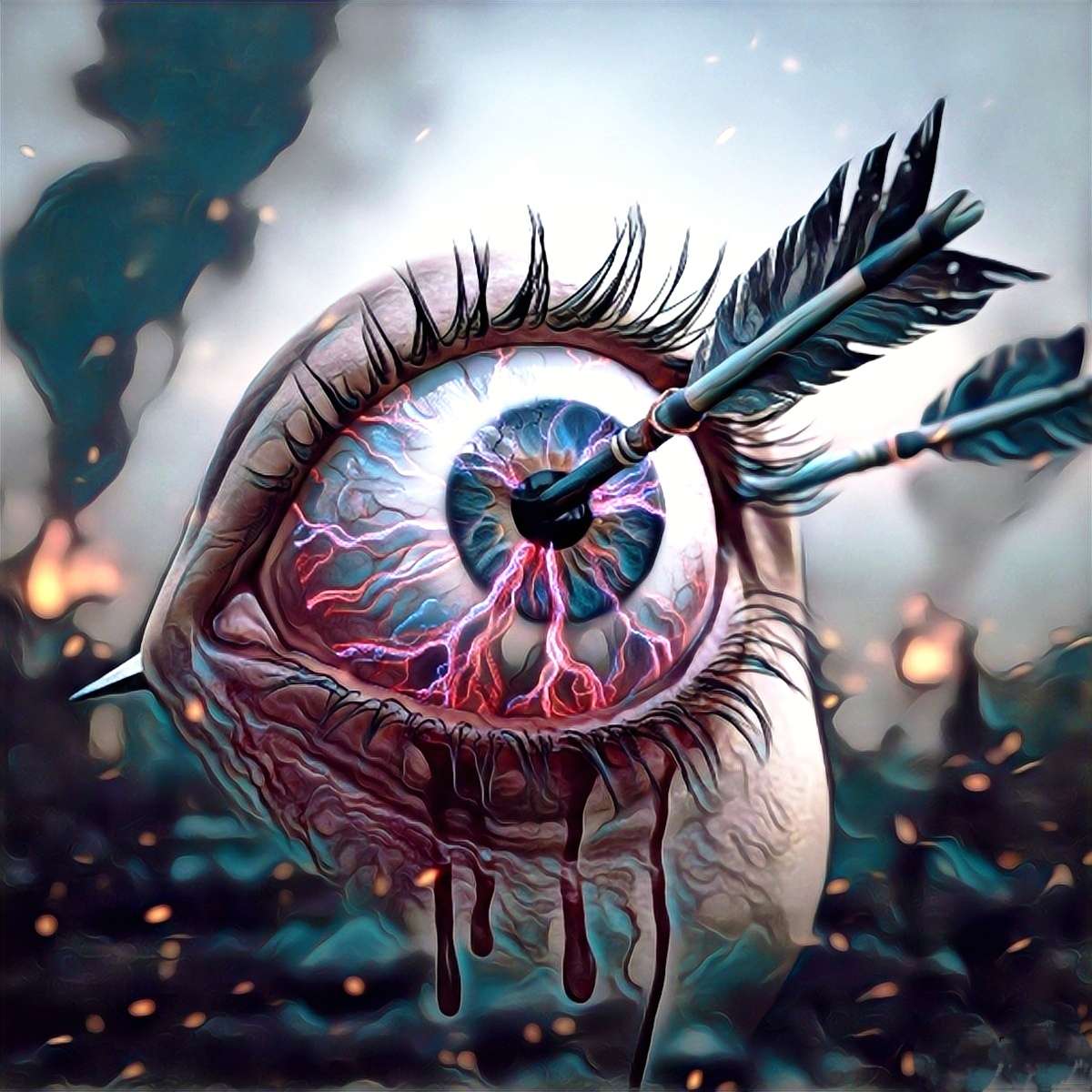


Injury to man’s “spiritual eye” has resulted in dimness of moral vision and blindness to truth which afflict 85% of the earth’s population, who linger below the level of integrity.
As scientific understanding has grown, so our world has become dehumanized. Man feels himself isolated in the cosmos, because he is no longer involved in nature and has lost his emotional “unconscious identity” with natural phenomena. These have slowly lost their symbolic implications. Thunder is no longer the voice of an angry god, nor is lightning his avenging missile. No river contains a spirit, no tree is the life principle of a man, no snake the embodiment of wisdom, no mountain cave the home of a great demon. No voices now speak to man from stones, plants, and animals, nor does he speak to them believing they can hear. His contact with nature has gone, and with it has gone the profound emotional energy that this symbolic connection supplied.
This enormous loss is compensated for by the symbols of our dreams. They bring up our original nature its instincts and peculiar thinking. Unfortunately, however, they express their contents in the language of nature, which is strange and incomprehensible to us. It therefore confronts us with the task of translating it into the rational words and concepts of modern speech, which has liberated itself from its primitive encumbrances notably from its mystical participation with the things it describes. Nowadays, when we talk of ghosts and other numinous figures, we are no longer conjuring them up. ‘The power as well as the glory is drained out of such once-potent words. We have ceased to believe in magic formulas; not many taboos and similar restrictions are left; and our world seems to be disinfected of all such “superstitious” minima as “witches, warlocks, and worricows,” to say nothing of werewolves, vampires, bush souls, and all the other bizarre beings that populated the primeval forest.
To be more accurate, the surface of our world seems to be cleansed of all superstitious and irrational elements. Whether, however, the real inner human world fiction about it) is also freed from primitivity is another question. Is the number 13 not still taboo for many people? Are there not still many individuals possessed by irrational prejudices, projections, and childish illusions? A realistic picture of the human mind reveals many such primitive traits and survivals, which are still playing their roles just as if nothing had happened during the last 500 years.
It is essential to appreciate this point. Modern man is in fact a curious mixture of characteristics acquired over the long ages of his mental development. This mixed-up being is the man and his symbols that we have to deal with, and we must scrutinize his mental products very carefully indeed. Skepticism and scientific conviction exist in him side by side with oldfashioned prejudices, outdated habits of thought and feeling, obstinate misinterpretations, and blind ignorance.
Our intellect has created a new world that dominates nature, and has populated it with monstrous machines. The latter are so indubitably useful that we cannot see even a possibility of getting rid of them or our subservience to them. Man is bound to follow the adventurous promptings of his scientific and inventive mind and to admire himself for his splendid achievements. At the same time, his genius shows the uncanny tendency to invent things that become more and more dangerous, because they represent better and better means for wholesale suicide.
In view of the rapidly increasing avalanche of world population, man has already begun to seek ways and means of keeping the rising flood at bay. But nature may anticipate all our attempts by turning against man his own creative mind. The H-bomb, for instance, would put an effective stop to overpopulation. In spite of our proud domination of nature, we are still her victims, for we have not even learned to control our own nature. Slowly but, it appears, inevitably, we are courting disaster.
There are no longer any gods whom we can invoke to help us. The great religions of the world suffer from increasing anemia, because the helpful numina have fled from the woods, rivers, and mountains, and from animals, and the godmen have disappeared underground into the unconscious. There we fool ourselves that they lead an ignominious existence among the relics of our past. Our present lives are dominated by the goddess Reason, who is our greatest and most tragic illusion. By the aid of reason, so we assure ourselves, we have “conquered nature.”
But this is a mere slogan, for the so-called conquest of nature overwhelms us with the natural fact of overpopulation and adds to our troubles by our psychological incapacity to make the necessary political arrangements. It remains quite natural for men to quarrel and to struggle for superiority over one another. How then have we “conquered nature”?
As any change must begin somewhere, it is the single individual who will experience it and carry it through. The change must indeed begin with an individual; it might be any one of us. Nobody can afford to look around and to wait for somebody else to do what he is loath to do himself. But since nobody seems to know what to do, it might be worth while for each of us to ask himself whether by any chance his or her unconscious may know something that will help us. Certainly the conscious mind seems unable to do anything useful in this respect. Man today is painfully aware of the fact that neither his great religions nor his various philosophies seem to provide him with those powerful animating ideas that would give him the security he needs in face of the present condition of the world.
This proud picture of human grandeur is unfortunately an illusion only and is counter balanced by a reality which is very different. In this reality man is the slave and victim of the machines that have conquered space and time for him; he is intimidated and endangered by the might of the war technique which is supposed to safeguard his physical existence; his spiritual and moral freedom, though guaranteed within limits in one half of his world, is threatened with chaotic disorientation, and in the other half it is abolished altogether. Finally, to add comedy to tragedy, this lord of the elements, this universal arbiter, hugs to his bosom notions which stamp his dignity as worthless and turn his autonomy into an absurdity. All his achievements and possessions do not make him bigger; on the contrary, they diminish him, as the fate of the factory worker under the rule of a “just” distribution of goods clearly demonstrates.