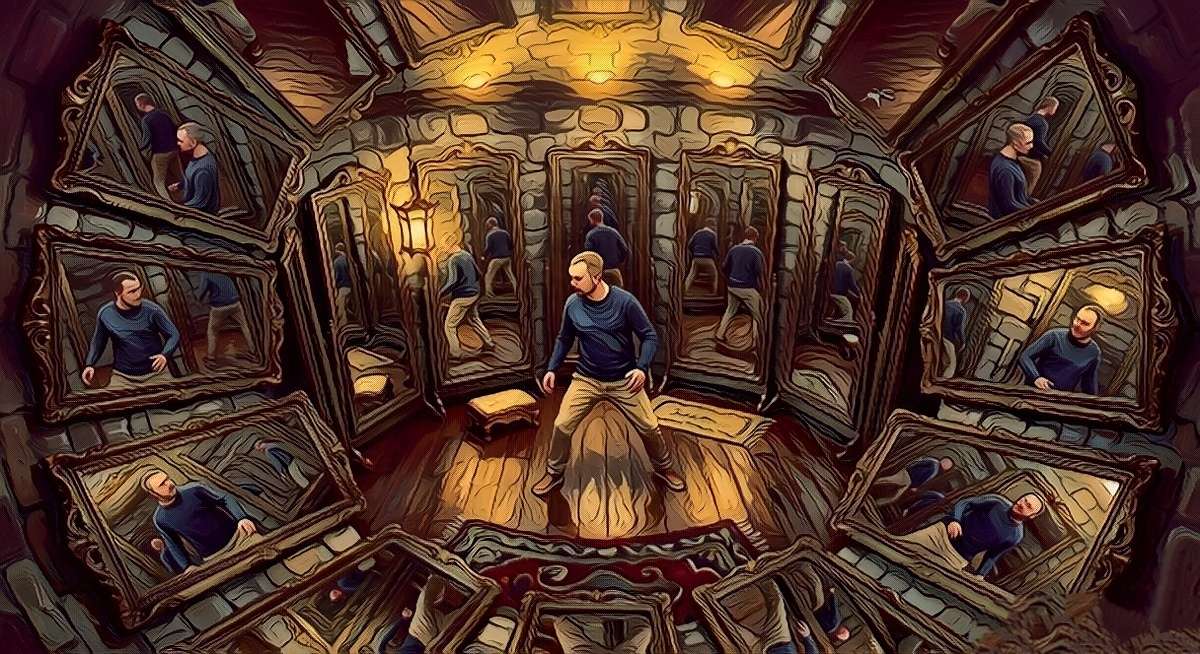
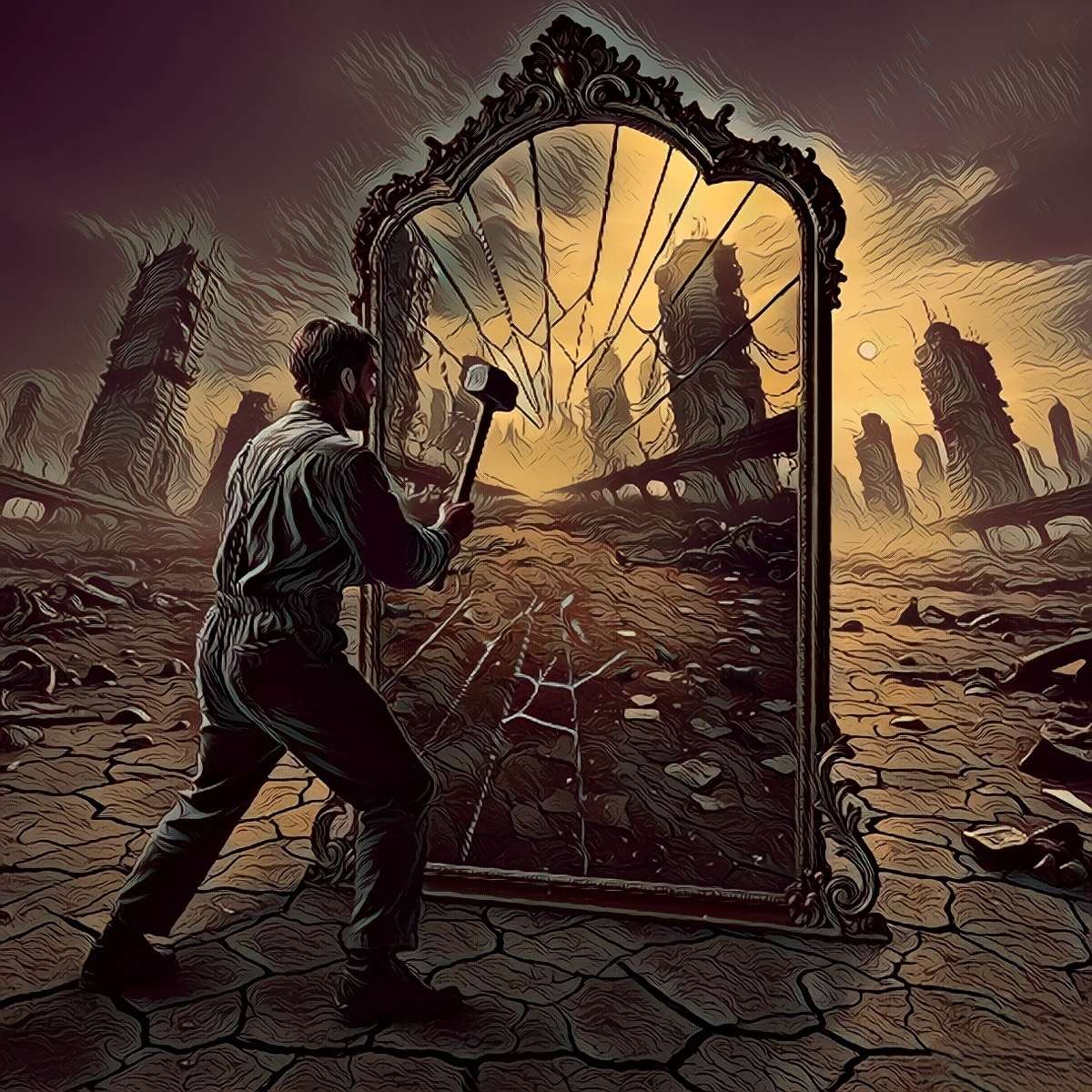
The human mind, that intricate engine of thought, emotion, and consciousness, does not spring forth fully formed in a vacuum. It is, instead, a profoundly complex artifact, meticulously sculpted by the ceaseless, iterative forces of time, experience, and memory. Our current self—the way we perceive the world, the choices we make, and the emotions we feel—is not merely the result of this moment, but the culmination of countless moments that have preceded it. To say “Our minds are the product of many yesterdays” is to acknowledge the profound, layered, and often invisible influence of history—both personal and collective—on the architecture of our being.
The Deep Time of Evolutionary Heritage
Before we even consider personal history, our minds carry the imprint of a staggeringly deep, biological “yesterday”: evolutionary time. The very structure of our brain—the limbic system that governs our primitive emotions, the neocortex responsible for language and abstract thought—is a palimpsest written over millions of years. Our innate fears, our capacity for attachment, our impulse towards cooperation or competition, are not learned behaviors in the moment; they are inherited survival strategies.
- The Reptilian Brain: Our reflexive, automatic responses are echoes of our most ancient past, ensuring basic physiological functions and immediate survival reactions.
- The Emotional Core: The mechanisms that process trauma, joy, and fear—often residing deep within the brain—were honed in environments vastly different from our own, yet their influence persists, coloring our modern reactions.
- Cognitive Biases: Many of the predictable errors in human reasoning are not flaws, but cognitive shortcuts (heuristics) that were efficient for quick decision-making in a high-stakes ancestral environment.
Our present consciousness is thus housed in a biological apparatus that is fundamentally a product of all life’s yesterdays.
The Personal Tapestry: Developmental Yesterdays
Beyond the evolutionary, the most palpable influence comes from our individual developmental trajectory. From the moment of birth, the mind begins its relentless process of recording, interpreting, and internalizing. Early experiences—the nature of our attachment figures, the sensory richness of our environment, the emotional climate of our upbringing—lay the foundational “scaffolding” upon which all later experiences are built.
1. The Power of Schema Formation
The field of cognitive psychology posits that the mind organizes information into mental structures called schemas.
These schemas are derived entirely from “yesterdays”—repeated interactions and conclusions.
- A child repeatedly praised for effort forms a schema about self-efficacy and growth mindset.
- A person who experienced betrayal forms a schema about trust and interpersonal vigilance.
These schemas act like filters, determining which information we pay attention to today, how we interpret ambiguous situations, and even how we recall past events. Our present perception is never truly objective; it is always filtered through the cumulative lens of all previous perceptions.
2. Memory as the Architect
Memory is not a passive storage vault; it is an active, reconstructive process that constantly re-edits our sense of self. Our autobiographical memory—the story we tell ourselves about who we are—is the very definition of being a “product of many yesterdays.”
- Selective Recall: We tend to remember events that confirm our current self-narrative, subtly reinforcing the established identity.
- The Emotional Residue: A forgotten childhood event might leave behind a lingering emotional residue—a subtle anxiety or an unfounded optimism—that shapes our present mood and reactions, a ghost from a past day.
- The Role of Habit: Every skill we possess, from riding a bike to managing our temper, began as a conscious effort yesterday and has become an unconscious, neuronal pathway today. These ingrained habits represent the automation of past effort.
The Social and Cultural Legacy
No mind exists in isolation. We are also products of societal and cultural yesterdays. The language we speak, the moral codes we follow, the societal roles we inhabit—all were defined and refined by generations that came before us.
- Linguistic Determinism: The very structure of the language learned in our early yesterdays shapes our cognitive potential and how we categorize the world (the Sapir-Whorf hypothesis).
- Cultural Narratives: The stories, myths, and historical accounts passed down through a culture provide a framework for understanding human existence, success, and failure. Our sense of purpose today is often deeply rooted in these ancient, collective “yesterdays.”
- Historical Trauma: The impact of major historical events—wars, discrimination, economic shifts—can be passed down epigenetically and through family narratives, influencing the psychological landscape of subsequent generations.
The Continuous Feedback Loop: Yesterday Shaping Tomorrow
The beauty and burden of this reality is that the process is ongoing. Today is already forming the yesterdays that will shape our minds tomorrow. This understanding offers a profound sense of agency:
- Mindfulness of the Present: Recognizing that current actions and thoughts are future memories and habits encourages us to be more deliberate and intentional in the present moment.
- Revising the Narrative: While we cannot change the events of our past yesterdays, we can—through therapy, reflection, and new experiences—change the meaning we assign to them, thus altering the filter (schema) that governs our present experience.
- Conscious Habit Formation: By consciously deciding to practice a new behavior (patience, discipline, learning), we are actively laying down the neuronal tracks that will become the automatic, effortless “products” of our minds in the days to come.
In conclusion, the mind is a grand architectural achievement, built layer upon layer: an evolutionary foundation, a personal scaffolding of memory and experience, and a cultural veneer of language and tradition. To understand ourselves is to become a dedicated archeologist of our own history, recognizing that the self of today is the ever-evolving museum housing the artifacts of countless yesterdays.