
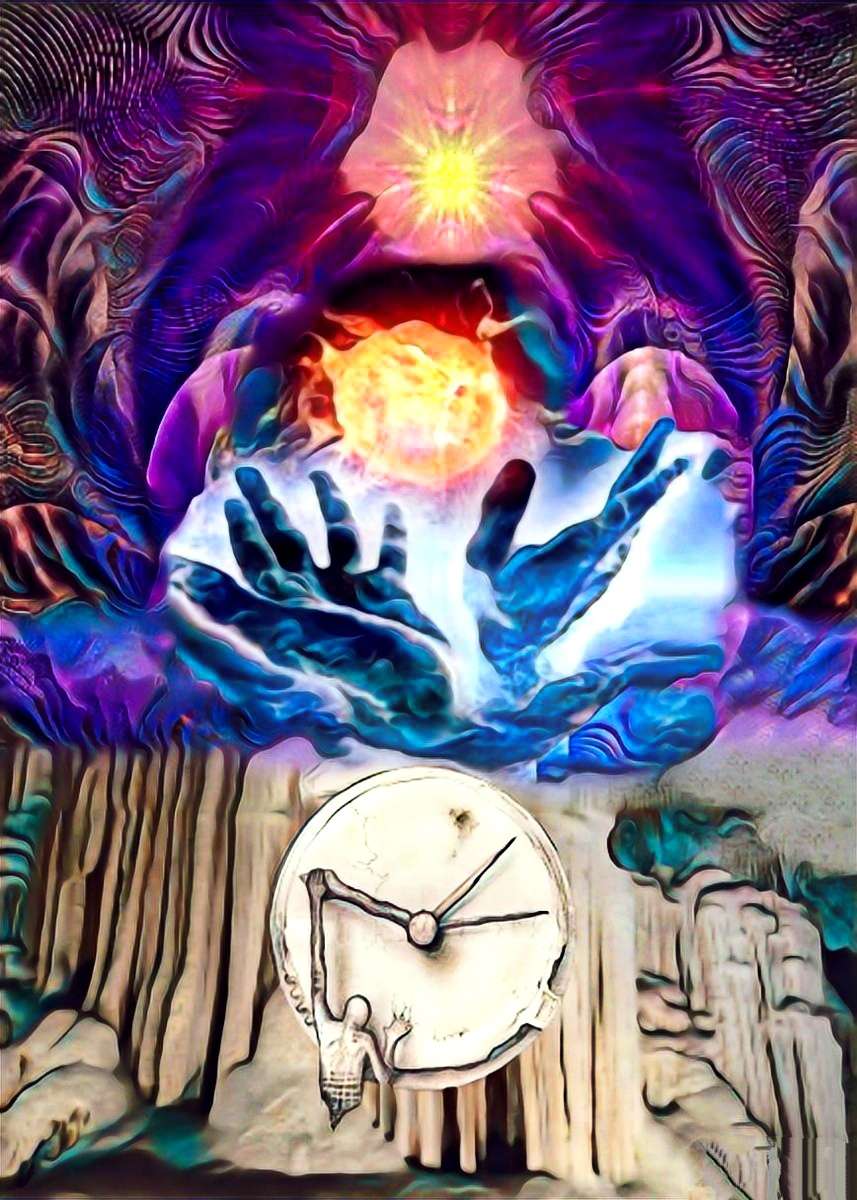


The Significance of the Shrimad Bhagwat Geeta and the Nature of Reality
The Shrimad Bhagwat Geeta, often simply referred to as the Gita, stands as a cornerstone of Indian philosophy and spirituality. This revered text unfolds within the dramatic narrative of the Kurukshetra War, a setting that provides a compelling backdrop for the exploration of profound philosophical questions and moral dilemmas. At its heart, the Gita presents a dialogue between Lord Krishna, the divine charioteer and guide, and Arjuna, the warrior prince facing an existential crisis on the battlefield. Their discourse delves into the fundamental nature of reality, offering insights that have shaped Indian thought for centuries and continue to inspire individuals across the globe.
The Gita serves as a remarkable synthesis of various traditions within Hinduism, drawing from the Vedic concept of dharma, the analytical framework of Samkhya philosophy, the practical disciplines of Yoga, and the metaphysical insights of Vedanta. It emphasizes the crucial importance of fulfilling one’s dharma, or duty, without attachment to the outcomes of actions. To guide individuals toward self-realization and liberation, the Gita introduces three primary paths or yogas: karma yoga, the path of selfless action; bhakti yoga, the path of devotion; and jnana yoga, the path of knowledge. These diverse paths offer various approaches to understanding and engaging with the multifaceted nature of reality.
The universal themes explored within the Gita, such as duty, self-discovery, and spiritual growth, transcend cultural and religious boundaries, contributing to its widespread recognition and profound influence worldwide. Considered India’s invaluable contribution to global wisdom, the Bhagwat Geeta is not merely a holy scripture but is also regarded as a practical guide for navigating the complexities of daily life, embodying the timeless knowledge of ultimate reality, often referred to as Brahmavidya.
The inquiry into the nature of reality stands as a central pursuit in philosophy, and the Shrimad Bhagwat Geeta offers a unique and profound perspective on this fundamental question. Its metaphysical teachings explore the essential nature of the individual self, the cosmos, and the Supreme Reality. The Gita delves into the intricate relationship between the individual soul (atman) and the ultimate reality (Brahman), a connection that forms the bedrock of its understanding of existence. Comprehending the nature of reality holds paramount significance within the Gita’s teachings, as it is directly linked to the attainment of spiritual liberation (moksha) or freedom from the cyclical nature of birth and death. The text encourages a spirit of intellectual inquiry, asserting an individual’s right to question all aspects of existence, including the very nature of reality itself.8
The Gita’s teachings are uniquely presented within a compelling narrative framework. The dialogue between Krishna and Arjuna unfolds not as an abstract philosophical treatise but as a direct response to a tangible crisis faced by Arjuna on the battlefield. This dramatic context suggests that the Gita’s understanding of reality is not intended merely for intellectual contemplation but is meant to be actively applied and personally experienced in the practicalities of life. The characters and situations depicted are not confined to a specific historical moment but serve as timeless representations of the universal human condition. Furthermore, the Gita’s integration of diverse Indian religious thoughts underscores its role in harmonizing various spiritual traditions into a comprehensive and inclusive worldview. By weaving together Vedic principles, Samkhya philosophy, Yoga practices, and the path of devotion, the Gita strives to offer a holistic framework that resonates with individuals of varying temperaments and spiritual inclinations, pointing towards a multifaceted and inclusive understanding of ultimate truth.
Core Philosophical Concepts in the Gita on Reality
The Shrimad Bhagwat Geeta elucidates the nature of reality through several core philosophical concepts, providing a comprehensive understanding of existence and the individual’s place within it.
- Brahman: The Ultimate Reality
The Gita introduces Brahman as the Absolute, the ultimate reality that underlies the entirety of the universe and represents the unchanging truth behind the constantly shifting phenomenal world. It is the ultimate reality that cannot be transcended by anything else. Brahman is described as pure, non-dual consciousness, indivisible, without a physical form, infinite in scope, and pervading all of existence like the very sky. It serves as the fundamental ground from which all existence originates, the very basis of all awareness, and the ultimate source of all bliss. This ultimate reality exists beyond the limitations of time and space as we understand them, yet it is the very foundation that supports the entire cosmic manifestation throughout its cycles. For individual souls, Brahman represents the ultimate destination, the Supreme Indestructible Entity to which they aspire. Indeed, it is that which remains after everything else in the universe passes away. The Gita portrays Brahman as both transcendent, existing beyond the confines of the material world, and immanent, being present within every aspect of creation. The divine essence is understood to be both personal, capable of relationship, and formless, beyond human comprehension.
The Gita further reveals that Brahman is the fundamental source of both the material and spiritual dimensions of existence. The Supreme Soul, embodied by Lord Krishna, is the origin from which all that is material and all that is spiritual comes into being. This signifies that Brahman is not merely an abstract philosophical idea but the very ground of all that exists.
- Atman: The Individual Soul and its Relation to Brahman
The concept of Atman in the Gita refers to the individual self, or jivatman, which is the eternal essence residing within each human being. It is distinct from the temporary and changing aspects of an individual, such as the mind, the ego, and the physical body. The Gita describes Atman as the true and enduring essence of a person. In its fundamental nature, the Atman is identical to Brahman, representing a spark of the divine that possesses transcendental qualities, albeit in a minute quantity. The dialogue between Krishna and Arjuna can be seen as an enduring metaphor for the constant interaction between the individual self and the higher Godself, highlighting their intrinsic connection. The Atman is portrayed as immutable and existing perpetually, indestructible and free from birth, eternal in its duration, immortal in its essence, and ageless in its being. It is the Sat, the aspect of reality that persists through all periods of time. Upon the death of the physical body, the Atman undergoes transmigration, moving from one body to another in a process known as reincarnation. This transition is likened to a person discarding worn-out clothes and putting on new ones, emphasizing the continuity of the soul despite the change in physical form.
The ultimate aim of human existence, according to the Gita, is self-realization, which involves recognizing the inherent unity between the individual soul (Atman) and the ultimate reality (Brahman), thereby transcending the illusion of separateness that is fostered by the ego, or ahamkara.
The Gita underscores the profound significance of realizing one’s inner self, the Atman, considering it a primary objective of human life. True happiness, the text suggests, is attained through this realization, which involves understanding one’s true nature as Atman and achieving a union of the individual soul with the transcendental Self, Brahman. This process of realization necessitates detaching oneself from the various attachments to the transient material world.
- Maya: Illusion and the Material World
The Shrimad Bhagwat Geeta introduces Maya as the divine energy of God, a potent force that creates the illusion of the material world and obscures the true understanding of reality. It is explicitly identified as God’s external energy. Maya is comprised of the three fundamental gunas, or modes of nature: sattva, representing goodness and purity; rajas, embodying passion and activity; and tamas, signifying ignorance and inertia. These qualities constitute the very fabric of the material world as we perceive it. One of the key functions of Maya is to make the singular, unified reality of Brahman appear as a multiplicity of separate entities, thus creating a sense of division and individuality. It acts as a veil of ignorance, distorting our perception of reality and leading us to believe in the permanence and ultimate truth of the material world. Overcoming Maya is described as a significant challenge, yet the Gita assures that it can be readily transcended by those who wholeheartedly surrender themselves to the divine will. The material world, shaped by Maya, is portrayed as temporary and constantly subject to change, a cosmic illusion that veils the eternal truth. Indeed, the Gita states that nothing within this realm possesses lasting permanence.
The Gita clarifies that Maya is not merely a state of non-existence but a real and dynamic energy that emanates from God, possessing the power to bring forth and sustain the appearance of the material universe. It is described as mama maya, meaning “My Maya,” indicating its integral role as part of the divine. While Maya creates illusion, it serves a specific purpose within the cosmic order, potentially to facilitate the soul’s journey of awakening and return to its true, eternal nature.
- Karma: Action and its Impact on Reality
Karma is a fundamental concept in the Gita, referring to the universal law of cause and effect that governs all actions and ultimately shapes an individual’s destiny. The Gita teaches that every action, whether physical, mental, or emotional, inevitably produces consequences that manifest both in the current life and in future existences. Actions that are performed with a spirit of detachment and in accordance with one’s dharma, or righteous duty, lead to spiritual liberation through the practice of karma yoga. The text emphasizes the importance of acting without being attached to the potential outcomes or rewards of one’s deeds. Conversely, actions that are driven by selfish desires and the ego tend to create bondage, further entangling the individual in the cycle of birth and death. The Gita stresses the significance of fulfilling one’s prescribed duty without any concern for personal gain or loss, encouraging a focus on the action itself rather than its results.
The Gita clarifies that true renunciation does not necessitate the complete cessation of action but rather involves performing one’s duties without any attachment to the fruits they may yield.1 Lord Krishna instructs Arjuna that while he has the right to engage in his assigned work as a warrior, he should not be preoccupied with the results of the battle. This detachment enables Arjuna to act without being motivated by personal desires or the fear of negative consequences, thereby aligning his actions with the principles of dharma.
Key Slokas from the Bhagwat Geeta on the Nature of Reality
The Shrimad Bhagwat Geeta directly addresses the nature of reality through several key slokas, offering profound insights into the impermanence of the material world, the eternal nature of the Atman, the supremacy of Brahman, and the role of Maya.
- Slokas on the Impermanence of the Material World
- BG 2.14:mātrā-sparśhās tu kaunteya śhītoṣhṇa-sukha-duḥkha-dāḥ āgamāpāyino ‘nityās tāns-titikṣhasva bhārata.19
- Translation: “O son of Kunti, the nonpermanent appearance of happiness and distress, and their disappearance in due course, are like the appearance and disappearance of winter and summer seasons. They arise from sense perception, O scion of Bharata, and one must learn to tolerate them without being disturbed.”
- Insight: This verse highlights the transient nature of sensory experiences, the very foundation of our perception of the material world. By comparing pleasure and pain to the cyclical changes of seasons, the Gita suggests that these experiences are fleeting and should be endured with equanimity.
- BG 8.16:ā-brahma-bhuvanāl lokāḥ punar āvartino ‘rjuna mām upetya tu kaunteya punar janma na vidyate.46
- Translation: “From the highest planet in the material world down to the lowest, all are places of misery wherein repeated birth and death take place. But one who attains to My abode, O son of Kunti, never takes birth again.”
- Insight: This sloka underscores the impermanence of all realms within the material creation, including the celestial abodes presided over by Brahma. The pervasive cycle of birth and death in these worlds emphasizes that true liberation lies beyond this temporary existence, in the eternal abode of the Supreme.
- BG 9.4:mayā tatam idaṁ sarvaṁ jagad avyakta-mūrtinā mat-sthāni sarva-bhūtāni na chāhaṁ teṣhv avasthitaḥ.52
- Translation: “By Me, in My unmanifested form, this entire universe is pervaded. All beings are in Me, but I am not in them.”
- Insight: This verse speaks to the all-encompassing presence of the Supreme Being in His unmanifested form, suggesting that the manifested universe, while seemingly concrete, is ultimately sustained by a reality that transcends direct sensory perception. The paradoxical statement implies the divine’s immanence and transcendence.
- BG 2.14:mātrā-sparśhās tu kaunteya śhītoṣhṇa-sukha-duḥkha-dāḥ āgamāpāyino ‘nityās tāns-titikṣhasva bhārata.19
- Slokas on the Eternal Nature of the Atman
- BG 2.12:na tv evāhaṁ jātu nāsaṁ na tvaṁ neme janādhipāḥ na chaiva na bhaviṣhyāmaḥ sarve vayam ataḥ param.51
- Translation: “Never was there a time when I did not exist, nor you, nor all these kings; nor in the future shall any of us cease to be.”
- Insight: This foundational verse establishes the eternal continuity of individual existence, asserting that the self (Atman) is not bound by the temporal limitations of birth and death.
- BG 2.13:dehino ‘smin yathā dehe kaumāraṁ yauvanaṁ jarā tathā dehāntara-prāptir dhīras tatra na muhyati.65
- Translation: “As the embodied soul continuously passes, in this body, from boyhood to youth to old age, the soul similarly passes into another body at death. A sober person is not bewildered by such a change.”
- Insight: By drawing an analogy to the natural progression of bodily changes within a lifetime, this sloka explains the soul’s journey through successive lives, emphasizing that death is merely a transition.
- BG 2.20:na jāyate mriyate vā kadāchin nāyaṁ bhūtvā bhavitā vā na bhūyaḥ ajo nityaḥ śhāśhvato ‘yaṁ purāṇo na hanyate hanyamāne śharīre.
- Translation: “The soul is neither born, nor does it ever die; nor having once existed, does it ever cease to be. The soul is without birth, eternal, immortal, and ageless. It is not destroyed when the body is destroyed.”
- Insight: This pivotal verse unequivocally declares the Atman’s eternal, unborn, and indestructible nature, contrasting it sharply with the mortality of the physical body.
- BG 2.12:na tv evāhaṁ jātu nāsaṁ na tvaṁ neme janādhipāḥ na chaiva na bhaviṣhyāmaḥ sarve vayam ataḥ param.51
- Slokas on Brahman as the Supreme Reality
- BG 7.7:mattaḥ parataraṁ nānyat kiñchid asti dhanañjaya mayi sarvam idaṁ protaṁ sūtre maṇi-gaṇā iva.
- Translation: “There is nothing higher than Myself, O Arjun. Everything rests in Me, as beads are strung on a thread.”
- Insight: Lord Krishna proclaims His supreme status as the ultimate reality, the foundation upon which the entire universe is sustained, using the analogy of interconnected beads on a string.
- BG 8.3:akṣharaṁ brahma paramaṁ svabhāvo ‘dhyātmam uchyate bhūta-bhāvodbhava-karo visargaḥ karma-sañjñitaḥ.
- Translation: “The Supreme Indestructible Entity is called Brahman; one’s own self is called adhyatma. Actions pertaining to the material personality of living beings, and its development are called karma, or fruitive activities.”
- Insight: This verse provides a direct definition of Brahman as the imperishable and supreme essence, distinguishing it from the individual self and the concept of action.
- BG 15.16-17:dvāv imau puruṣhau loke kṣharaś chākṣhara eva cha kṣharaḥ sarvāṇi bhūtāni kūṭa-stho ‘kṣhara uchyate uttamaḥ puruṣhas tv anyaḥ paramātmety udāhṛitaḥ yo loka-trayam āviśhya bibharty avyaya īśhvaraḥ.
- Translation: “There are two kinds of beings in creation, the perishable and the imperishable. The perishable are all beings in the material realm. The imperishable are the the liberated beings. Besides these, is the Supreme Divine Personality, who is the indestructible Supreme Soul. He enters the three worlds as the unchanging Controller and supports all living beings.”
- Insight: These verses introduce the concept of Purushottama, the Supreme Divine Personality, who transcends both the mutable material world and the immutable individual souls, establishing the highest level of reality.
- BG 7.7:mattaḥ parataraṁ nānyat kiñchid asti dhanañjaya mayi sarvam idaṁ protaṁ sūtre maṇi-gaṇā iva.
- Slokas on Maya and the Illusionary Nature of the World
- BG 7.14:daivī hy eṣhā guṇa-mayī mama māyā duratyayā mām eva ye prapadyante māyām etāṁ taranti te.
- Translation: “My divine energy Maya, consisting of the three modes of nature, is very difficult to overcome. But those who surrender unto Me cross over it easily.”
- Insight: This verse describes Maya as a powerful divine energy, composed of the three gunas, that creates delusion and is hard to transcend, yet surrender to the divine offers a path to liberation from its influence.
- BG 7.13:tribhir guṇa-mayair bhāvair ebhiḥ sarvam idaṁ jagat mohitaṁ nābhijānāti mām ebhyaḥ param avyayam.
- Translation: “Deluded by the three modes [goodness, passion and ignorance], the whole world does not know Me who am above the modes and inexhaustible.”
- Insight: This sloka explains that the material world, governed by the three gunas of Maya, deludes beings, preventing them from recognizing the Supreme Reality that lies beyond these modes.
- BG 13.19-20:prakṛitiṁ puruṣhaṁ chaiva viddhy anādī ubhāv api vikārānśh cha guṇānśh chaiva viddhi prakṛiti-sambhavān kārya-kāraṇa-kartṛitve hetuḥ prakṛitir uchyate puruṣhaḥ sukha-duḥkhānāṁ bhoktṛitve hetur uchyate.
- Translation: “Know that prakṛiti (material nature) and puruṣh (the individual souls) are both beginningless. Also know that all transformations of the body and the three modes of nature are produced by material energy. In the matter of creation, the material energy is responsible for cause and effect; in the matter of experiencing happiness and distress, the individual soul is declared responsible.”
- Insight: These verses discuss the eternal nature of Prakriti and Purusha, with Prakriti as the source of material manifestations and the soul experiencing the effects of the gunas, highlighting the interplay between illusion and the individual’s perception of reality.
- BG 7.14:daivī hy eṣhā guṇa-mayī mama māyā duratyayā mām eva ye prapadyante māyām etāṁ taranti te.
Interpretations and Commentaries on the Slokas
The slokas of the Bhagwat Geeta concerning the nature of reality have been subject to diverse interpretations across different schools of Vedanta, each offering a unique perspective on the relationship between Brahman, Atman, and Maya.
- Advaita Vedanta Perspective: Advaita Vedanta, championed by Adi Shankaracharya, posits the ultimate non-duality of reality, where Brahman is the sole, absolute truth, and the individual soul (Atman) is fundamentally identical to Brahman. The phenomenal world, including the diversity of beings and objects, is considered an illusion (Maya) that veils this underlying oneness. From this perspective, the Gita’s verses that speak of a personal God or the distinctness of individual souls are often interpreted as existing within the realm of Maya, serving as stepping stones towards the realization of the formless, attributeless Brahman. The ultimate goal of spiritual practice in Advaita Vedanta is to transcend this illusion of separateness and recognize the inherent identity of the self with the absolute reality. Commentaries within this school emphasize the power of knowledge (jnana) as the primary means to dispel ignorance and realize this non-dual truth.
- Vishishtadvaita Perspective: In contrast, Vishishtadvaita, with Ramanuja as its chief proponent, advocates a qualified non-dualism. This school recognizes Brahman as the supreme reality, personified as Vishnu or Krishna, endowed with infinite auspicious attributes (Saguna Brahman). While maintaining the ultimate oneness of reality, Vishishtadvaita posits that individual souls (Atman) and the material world are also real and distinct from Brahman, yet inseparably connected to and dependent upon Him. The relationship between the soul and Brahman is likened to that of a part to the whole or an attribute to a substance. Liberation, in this view, is achieved primarily through bhakti (devotion) to the personal God, where the soul experiences a blissful union with the divine without losing its individual identity. Ramanuja’s commentaries on the Gita emphasize this organic interconnectedness and the supremacy of devotion as the path to realizing the Supreme Person.
- Dvaita Vedanta Perspective: Dvaita Vedanta, founded by Madhvacharya, presents a more pronounced dualistic understanding of reality. This school asserts a fundamental and eternal difference between Brahman (Vishnu), individual souls (Atman), and the material world. Unlike Advaita, which sees the individual soul as ultimately identical to Brahman, Dvaita maintains that the soul is eternally distinct from God and entirely dependent on Him for its existence, actions, and liberation. The material world is also considered real and separate. Liberation (moksha) in Dvaita Vedanta is defined as eternal service to Vishnu, attained through bhakti and the realization of one’s complete dependence on God.Madhvacharya’s interpretations of the Gita underscore this dualistic nature of reality and the paramount importance of devotion to Vishnu as the means to salvation.
Gita’s Teachings on the Nature of Reality
The Shrimad Bhagwat Geeta offers a profound and multifaceted understanding of the nature of reality, centered around the key concepts of Brahman, Atman, Maya, and Karma. Brahman is presented as the ultimate, all-pervading reality, the source and sustainer of all existence. Atman, the eternal individual soul, is intrinsically linked to Brahman, sharing its essential nature while maintaining a distinct identity. Maya is described as the divine power that creates the illusion of the material world, obscuring the true nature of reality through its three gunas. Karma governs the cycle of actions and their consequences, shaping the individual’s journey through the material realm.
The Gita emphasizes both the transcendent and immanent aspects of reality. Brahman is not only beyond the material world but also resides within every being as the inner Self, pervading all of creation. This dual perspective allows for both a philosophical understanding of the ultimate truth and a personal, devotional relationship with the divine.
The Gita presents three primary paths to understanding and realizing this nature of reality: jnana yoga, the path of knowledge and understanding the true nature of self and reality; bhakti yoga, the path of devotion and surrender to the Supreme Being; and karma yoga, the path of selfless action performed without attachment to results. These paths cater to different temperaments and inclinations, all leading towards the ultimate goal of spiritual liberation.
Understanding the nature of reality, as taught in the Gita, has significant practical implications for living a meaningful and fulfilling life. It encourages detachment from the transient material world, emphasizes the importance of fulfilling one’s duty (dharma) with equanimity, and guides individuals towards the ultimate aim of spiritual liberation (moksha) by recognizing their true, eternal nature.
The Enduring Wisdom of the Bhagwat Geeta on Understanding Reality
The teachings of the Shrimad Bhagwat Geeta on the nature of reality hold enduring significance in contemporary times, offering profound guidance on self-discovery and spiritual growth. Its philosophical insights remain remarkably relevant, providing a timeless message that embodies the knowledge of ultimate reality for individuals seeking meaning and purpose in their lives. The Gita’s wisdom, contained within its sacred verses, continues to inspire and illuminate the human mind, offering a comprehensive framework for understanding existence and our place within the vast tapestry of the cosmos.



One response to “What is The Nature of Reality According to Shrimad Bhagwat Geeta?”
t1bjy4